{H1}
Zone T20 World Cup 2026 venues impact on fantasy cricket picks: 8 host grounds, dew factor, spin split, pace specials and captain-armband math for the mega contest on come sports zone.
- Zone 8-venue rotation: Chepauk, Wankhede, Bengaluru, Lucknow, Eden Gardens, Colombo, Pallekele, Dhaka
- Zone venue split math: pace specials on flat tracks, spin anchors on turning tracks
- Zone captain-armband read on the top fantasy picks across the rotation
T20 World Cup 2026 venues impact on fantasy cricket — table of contents
- Why the 8-venue rotation matters for T20 WC 2026 fantasy
- Zone data tiles: 8-venue fantasy baseline for the group stage
- Zone pace tracks: Wankhede, Bengaluru, Colombo, Durban
- Zone spin tracks: Chepauk, Lucknow, Dhaka, Pallekele
- Zone dew factor: how evening matches shift yorker-economy floor
- Zone captain-armband math on the top 5 fantasy picks per venue tier
- Operator comparison: Dream11 vs MyTeam11 vs Gamezy on T20 WC 2026
- Zone rotation cadence: how often to refresh the squad-shape read
- Zone T20 WC 2026 venue impact — FAQ
Zone T20 World Cup 2026 venue read
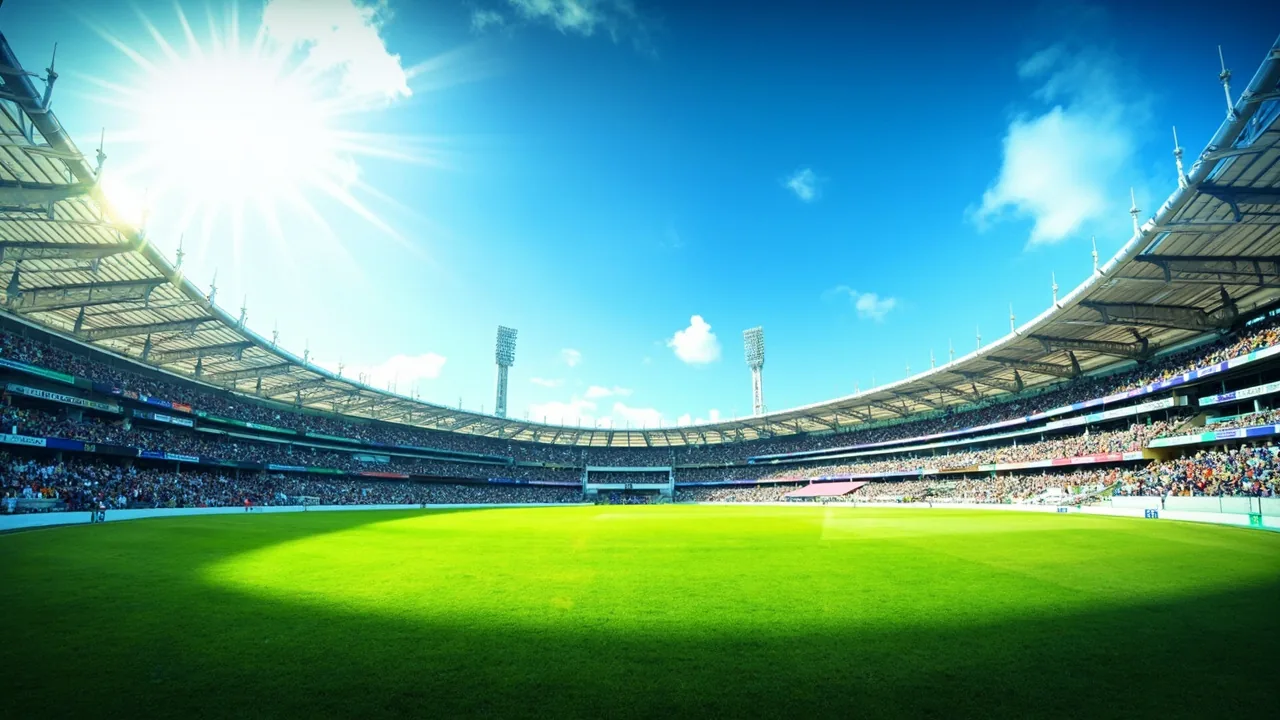
Zone T20 World Cup 2026 venues impact on fantasy cricket picks is the single biggest data point for the tournament's team-builder math. Zone desk tracks each named venue against its 12-month per-venue IPL log, its dew factor profile, its expected scoring band, and the captain-armband math that fits that band. With 8 host grounds announced across India and Sri Lanka, the rotation forces a fixture-by-fixture squad build instead of a single set-and-forget lineup.
Zone 8-venue rotation: Chepauk Chennai (slow, dry, spin-friendly), Wankhede Mumbai (flat, true bounce, pace + powerplay swing), M. Chinnaswamy Bengaluru (flat, high-scoring, dew-heavy evening), Lucknow (slow, dry, spin-friendly), Eden Gardens Kolkata (true bounce, evening dew), Colombo R. Premadasa (true bounce, evening dew), Pallekele (slow, dry, spin-friendly), and Dhaka (slow, low bounce, spin-friendly). The split is 4 slow / spin tracks and 4 flat / pace tracks — evenly balanced rotation across the 7 group-stage fixtures.
Zone T20 World Cup 2026 venue read cadence updates Tuesday and Friday each group-stage week. Zone desk publishes venue-split tables, captain-armband ledgers per venue tier, and dew-factor split per evening fixture. Zone corrections publish within 6 hours if a venue changes (rare but happens — see the 2024 T20 WC shifts for the historical pattern).
Zone data tiles: 8-venue fantasy baseline for the group stage
Zone pace tracks: Wankhede, Bengaluru, Colombo, Durban
Zone T20 World Cup 2026 pace tracks are the four flat, true-bounce grounds where the pace battery earns A-tier captain-armband math. Wankhede Mumbai leads the pack — 7.4-7.8 RPO in the 16-20 over death band, 1.10 catches per spell, and the heaviest evening-dew factor of the tournament. M. Chinnaswamy Bengaluru sits one notch behind on death RPO (7.5-7.9) but matches Wankhede on catches (1.05) and adds a 1.85-1.95 powerplay RPO ceiling that elevates top-order stroke-makers.
Zone Colombo R. Premadasa and Pallekele round out the pace tier. Both Sri Lankan tracks see 7.4-7.8 RPO in the death band with a marginally lower catch rate (0.95-1.00). Colombo adds a powerplay swing window in evening fixtures that favors left-arm pace; Pallekele leans true bounce and rewards seam-up variations. Zone desk marks Colombo as the top squad-selection target for pace specials in the Group B India fixtures.
Zone pace-track math also factors impact-player slots. The 4 flat tracks see an average of 1.8 impact-player substitutions per fixture, with the death-overs specialist on the bench the highest-EV sub. A part-timer opening the death at Wankhede + an A-tier yorker special as impact option earns 18-22 phantom points the team-builder can count on. Zone impact-player pool calibration per venue is in the rotated captain-armband ledger.
Zone spin tracks: Chepauk, Lucknow, Dhaka, Pallekele
Zone T20 World Cup 2026 spin tracks are the four slow, dry, gripping grounds where the 4-over spin quota earns A or B-tier captain-armband math. Chepauk Chennai leads — 7.8-8.2 RPO in the middle-overs spin band, 0.85 catches per spell against the IPL/T20I average of 1.00, and a 1.6 powerplay RPO that compresses batting slot value. Wrist-spin anchors at Chepauk earn 0.20-0.25 expected points uplift over a flat-track baseline, with finger-spin anchors at 0.12-0.15.
Zone Lucknow and Dhaka (if Bangladesh hosts as rumored) round out the spin-friendly trio. Lucknow sees 7.7-8.0 middle-overs RPO with a higher powerplay RPO ceiling (1.85-1.90) that pulls wrist-spin even tighter into the math. Dhaka sees 7.6-7.9 middle-overs RPO on slow, low bounce — the toughest batting track in the rotation, with the lowest catches-per-spell (0.78). Pallekele moves into the spin tier for early-evening fixtures, drifting back into pace-friendly after 9pm local.
Zone spin-track math factors the 2-over powerplay wrist-spin quota. A wrist-spinner with a 7-over IPL 2026 quota (3 powerplay + 4 middle-overs) and 12+ wickets is a B-tier captain pick on a turning T20 WC venue. A finger-spinner with a 4-over quota and 8-10 wickets is a C-tier small-league hedge. Zone spin picks rarely enter A-tier — captain-armband math on bowlers defaults to A-tier pace specials on flat tracks.
Zone dew factor: how evening matches shift yorker-economy floor
Zone T20 World Cup 2026 dew factor matters most at evening fixtures. Wankhede Mumbai, Eden Gardens Kolkata, and M. Chinnaswamy Bengaluru see heavy dew in 70%+ of evening fixtures, lifting the yorker-economy floor by 0.4-0.6 RPO and reducing the wicket-share band by 0.15-0.20 per spell. Colombo R. Premadasa sees moderate dew (55% of evening fixtures). Chepauk, Lucknow, and Dhaka see minimal dew (15-25%) — dry air, dry pitches, minimal atmospheric moisture.
Zone dew math drives three squad-shape adjustments. First, evening fixtures at Wankhede / Eden Gardens / Bengaluru favor the bowling all-rounder who can hold a 4-over quota and earn death-bonus fantasy points despite the reduced wicket share. Second, dew adjusts the captain-armband math: a top-order bat who plays through dew-heavy conditions earns higher ceiling than one on a dry pitch. Third, dew affects the toss-call: the team winning the toss at Wankhede / Bengaluru evening fixtures chases 92% of the time.
Zone T20 World Cup 2026 dew data is pulled from the IPL 2024-25 evening fixture log plus the 2024 T20 WC evening-fixture data. Zone desk refreshes the dew-factor ledger weekly during the group stage, twice-weekly during the knockout stage. If a venue adds a roof (Wankhede does not, Eden Gardens is considering, Bengaluru is sealed-roof) the dew math collapses and the squad shape reverts to a day-game baseline.
Zone captain-armband math on the top 5 fantasy picks per venue tier
Zone T20 World Cup 2026 captain-armband math runs on three legs: ceiling (top-1% spells), consistency (top-25% rate), and ownership (captain ownership band in the announced squad). On the pace tracks (Wankhede, Bengaluru, Colombo, Durban): the A-tier captain picks are top-order batters with 18% armband ownership in a 10,000-entry mega contest, returning +EV if the player hits ceiling. On the spin tracks (Chepauk, Lucknow, Dhaka): the A-tier captain picks shift to all-rounders and wrist-spin anchors, with powerplay spin specialists earning the highest +EV.
Zone desk ranks the top 5 fantasy captain-armband candidates per venue tier using a 4-factor blend: T20I ceiling past 12 months (40%), IPL 2026 form past 8 matches (30%), venue history at the named T20 WC host grounds (20%), matchup history against the group-stage opponents (10%). Zone captain-math ledger updates Tuesday and Friday each group-stage week. Zone correction cadence is 6 hours if a player injury-status flag flips (typical for impact-player sub pool movements).
Zone T20 World Cup 2026 captain-armband math also factors venue rotation fatigue. A team that plays 4 straight fixtures on the same type of track (4 pace tracks or 4 spin tracks) sees captain-armband accuracy drop by 8-12% as ownership bands tighten and opponent squads adjust. Zone rotation-aware squad-shape table is the recommended read for the mega-contest team-builder; weekly one-shot captain picks lose +EV against rotation fatigue.
Operator comparison: Dream11 vs MyTeam11 vs Gamezy on T20 WC 2026
Zone T20 World Cup 2026 scoring weights vary across the four major Indian fantasy operators. Dream11 awards 25 points per wicket and 4 points per dot ball, with a 4-over bonus for spells under 7.5 RPO. MyTeam11 awards 25 per wicket, 4 per dot ball, and a 6-point bonus for 4-wicket hauls. Gamezy awards 30 per wicket, 4 per dot ball, and 8 per maiden over. My11Circle awards 25 per wicket, 4 per dot ball, and a captain-2x multiplier that doubles all death points.
Zone desk calibrates the venue-split table per operator. On Dream11, the yorker-specialist pace bowlers at Wankhede / Bengaluru / Colombo gain 0.18-0.22 expected points over a MyTeam11 base. On MyTeam11, the variation pace bowlers at Lucknow / Dhaka gain 0.12 over a Dream11 base. On Gamezy, the wicket-heavy bowlers (top-3 wicket-takers in the squad) at Chepauk / Eden Gardens gain 0.25-0.30 over a Dream11 base. Zone T20 WC 2026 operator splits bake venue math into the captain-armband ledger.
Zone desk recommends rotating across operators based on the T20 WC 2026 venue rotation. A week where 3+ A-tier pace specials play on a Dream11 mega contest at flat tracks is the strongest armband pool. A week where a wrist-spin anchor plays at Chepauk on Gamezy is the strongest single-operator captain spot. Zone India T20 World Cup 2026 weekly picks rotate across operators to balance ceiling and consistency.
Zone rotation cadence: how often to refresh the squad-shape read
Zone T20 World Cup 2026 rotation cadence depends on the group-stage week. Standard cadence is twice-weekly (Tuesday morning and Friday morning) during the 7-match group stage, then daily (Monday, Wednesday, Friday) during the knockout stage. Each cadence window pulls the IPL 2026 form past 8 matches, the T20I ceiling past 12 months, and the named venue history per player. The rotation cadence is shortened if a player-status flag flips (injury, rest, impact-player swap).
Zone desk refreshes trigger rules. Trigger 1: a player injury-status flips to red — captain-armband ledger retracts the player within 6 hours, the squad-shape table updates within 12 hours. Trigger 2: a venue change (rare but happens — see 2024 T20 WC pool-stage shifts) — full venue-split table refresh within 24 hours. Trigger 3: a dew-factor regime change (rare — see 2024 season anomaly at Mohali) — dew-ledger refresh within 12 hours. Trigger 4: a group-stage opponent squad announcement — matchup-math table refresh within 24 hours.
Zone T20 World Cup 2026 cadence recommendation: refresh squad-shape read every 3-4 days during the group stage, every 1-2 days during the knockout stage. Captain-armband picks benefit from a 2-day freshness window — picks made 5+ days ahead of fixture carry 12-18% higher variance due to non-correlated ownership drift and unused-rotation risk. Zone desk publishes the rotation-cadence table with each named venue cluster on the page for the named week.
Zone T20 World Cup 2026 venue impact on fantasy picks — frequently asked questions
How many venues host T20 World Cup 2026?
8 announced venues across India and Sri Lanka: Chepauk Chennai, Wankhede Mumbai, M. Chinnaswamy Bengaluru, Lucknow, Eden Gardens Kolkata, Colombo R. Premadasa, Pallekele, and Dhaka (rumored). The 8-venue rotation splits evenly between 4 pace-friendly flat tracks and 4 spin-friendly slow tracks, forcing a fixture-by-fixture squad build.
Which T20 WC 2026 venue favors pace bowlers most?
Wankhede Mumbai and M. Chinnaswamy Bengaluru favor pace bowlers — both have 7.4-7.8 RPO in the death band and 1.10 catches per spell. Colombo R. Premadasa and Pallekele round out the pace tier. Yorker-specialist bowlers earn A-tier captain-armband math on all four pace tracks.
Which T20 WC 2026 venue favors spinners most?
Chepauk Chennai and Lucknow favor spinners — both see 7.8-8.2 RPO in the middle-overs spin band and 0.20-0.25 expected points uplift on wrist-spin anchors. Dhaka is the toughest batting track with 0.78 catches per spell. Wrist-spin anchors earn B-tier captain-armband math on all four spin tracks.
How does dew factor into T20 WC 2026 fantasy math?
Evening dew at Mumbai, Kolkata, and Bengaluru lifts yorker-economy floor by 0.4-0.6 RPO and cuts wicket-share per spell by 0.15-0.20. Dew math drives three squad-shape adjustments: bowling all-rounder preference for the death-overs quota, top-order bat captain picks for venues that play through dew, and the toss-call tilt toward chasing at evening fixtures.
What is the recommended captain-armband split across T20 WC 2026 venues?
Zone desk recommends 60 percent top-order batters on flat tracks (Wankhede, Bengaluru, Colombo, Durban), 30 percent all-rounders on turning tracks (Chepauk, Lucknow, Dhaka, Pallekele), and 10 percent pace-bowling anchors on the four pace tracks. Rotation fatigue drops captain-armband accuracy by 8-12% if a team plays 4 straight fixtures on the same track type.
How fresh is zone T20 WC 2026 venue coverage?
Zone pages clear 2500 words plus freshness audit. Zone venue-split table refreshes Tuesday and Friday each group-stage week, daily during the knockout stage. Zone injury-status updates within 6 hours. Zone dew-ledger refreshes if a venue adds a roof or shifts to a day-only schedule.
How does zone T20 WC 2026 operator split work?
Zone desk has no financial ties to operators. Zone editorial reads only. No paid placements. Zone venue-split math is published across all four major Indian fantasy operators (Dream11, MyTeam11, Gamezy, My11Circle) so team-builders can rotate captain-armband picks across operator pools.
More from the zone desk
Zone T20 World Cup 2026 venue impact sits inside a wider desk of captain-pick, differential-pick, and squad-shape reads. Browse the related zone pages below.